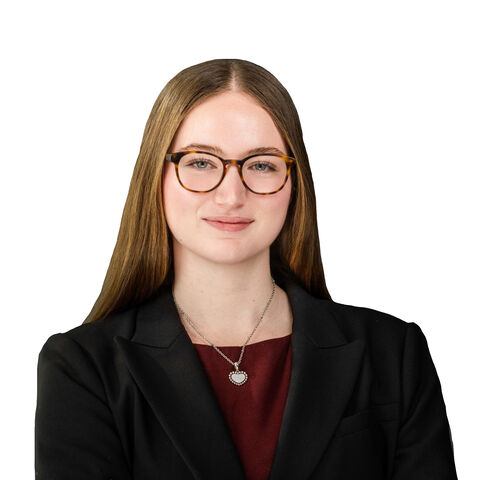
On Saturday, the Palestine Liberation Organization (PLO) announced that 64-year-old Hussein al-Sheikh, the current secretary-general of the PLO’s executive committee and a close ally of President Mahmoud Abbas, was approved by the executive committee to assume the position of vice president. Al-Sheikh was chosen out of the 16 executive committee members of the PLO.
What happened: Sheikh, now the first vice president ever in the PLO's history since 1964, rose to the post 48 hours after the PLO's Central Council voted Thursday to create the position. According to Palestinian news agency Wafa, 170 members of the Central Council voted in favor of amending the PLO bylaws to create the position, while one member opposed and another abstained. The vote took place during a two-day session in Ramallah that began on Wednesday, where its roughly 180 members were invited to attend.
Abbas, 89, holds the power to delegate tasks to, remove or accept the resignation of the newly approved vice chairman, according to Wafa.
Al-Sheikh has headed the executive committee for three years and has led the PLO’s negotiations affairs office. He has also served as the PA’s Minister of the General Authority of Civil Affairs since 2007, making him the key point of contact with Israeli authorities surrounding civilian affairs in the West Bank.
According to his biography, he spent 11 years in Israeli prisons from 1978 to 1989, where he learned Hebrew. Under Abbas, he has played a significant role in diplomacy. Earlier this year, he met with US President Donald Trump’s Middle East envoy, Steve Witkoff in Saudi Arabia. In 2024, he made visits to Qatar, Saudi Arabia, and the UAE and met with top US administration officials under former President Joe Biden. Al-Sheikh's appointment was welcomed by Saudi Arabia, whose foreign ministry released a statement on X saying that the kingdom welcomes “reform measures taken by Palestinian leadership” and wished Al-Sheikh success in his new position.
Why it matters: As Al-Monitor's Daoud Kuttab wrote this week, apart from a brief period from 1967 to 1969, the PLO has not had a vice chairman. Al-Sheikh will likely be the successor to 89-year-old Abbas — who has served in that capacity since 2004 — in his role as chairman of the PLO. Abbas is also the president of the Palestinian Authority, an administrative body that maintains a limited governing role in the occupied West Bank. Abbas’ Fatah party dominates both the PLO and the PA.
Though Abbas’ term as PA president expired in 2009, he has remained in power, having refused to hold elections. In 2021, Abbas postponed both parliamentary and presidential elections — the first elections scheduled since 2006, when Hamas won a major victory in legislative elections over Fatah and other factions — citing uncertainty over whether Israel would allow the elections in east Jerusalem, the West Bank and Gaza. But critics broadly said this was an excuse in the face of his waning popularity. In September 2024, a poll by the Palestinian Center for Policy and Survey Research showed Abbas' approval rating among Palestinians in Gaza and the West Bank at just 18%.
The PLO is the political body that represents Palestinians internationally, while the PA is an administrative government responsible for daily affairs in the occupied West Bank. Though Abbas currently leads both bodies, the leader of one does not necessarily have to be the leader of the other, as the PLO's leader is selected by its Executive Committee, and the PA president is, in theory, elected by Palestinian voters. Among other responsibilities, the PLO chairman oversees foreign policy and directs the work of the executive committee — responsibilities a future vice chairman could share and eventually inherit.
The only other way to fill the post of the PA president other than holding elections, according to the organization's bylaws, is on an interim basis, in which the head of the parliament of the PA — the Palestinian Legislative Council — assumes the role temporarily. But the parliament was dissolved in 2018 and has not held elections since.
Why now: The creation of the vice chairman role comes at a moment when Palestinian leadership is facing a legitimacy crisis — and when regional and global actors, including wealthy Arab nations like Saudi Arabia and the United Arab Emirates, are pushing for the establishment of a new technocratic body to govern postwar Gaza, one that would exclude the PA.
AL-MONITOR All-Access gives you unlimited access to all our journalism, the full Daily Briefing, exclusive interviews, premium newsletters, and live events — for less than $2/week.