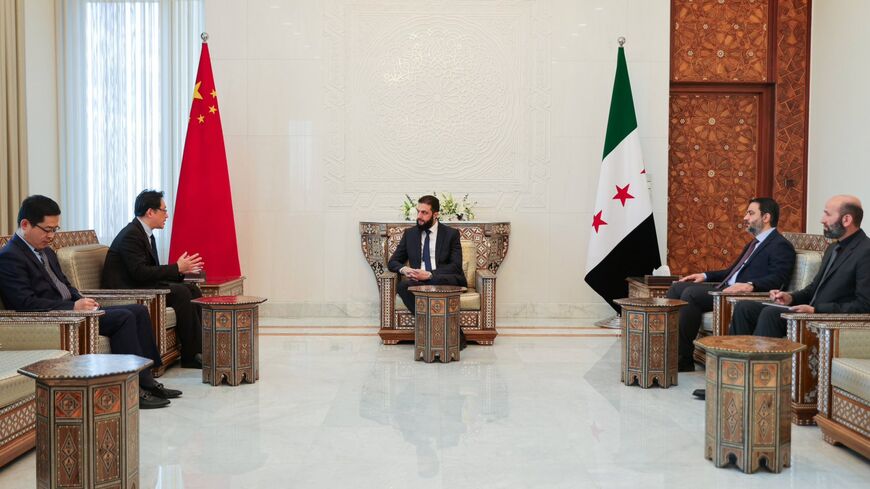
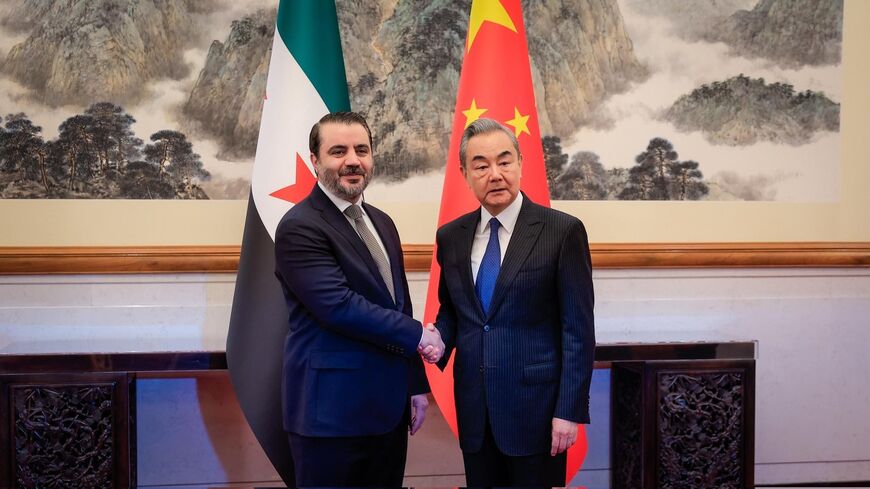
China wary of Syria's Uyghur militants, but business keeps growing
A groundbreaking report on Uyghur militants’ role in Assad’s downfall is sharpening Beijing’s concerns over Syria’s new Islamist-linked leadership.
Hi readers,
Happy Eid for all those celebrating. In this issue of Al-Monitor's China briefing, we look at a new groundbreaking report that suggests Uyghur fighters played a significant role in the collapse of Bashar al-Assad’s regime in Syria. NPR reported that thousands of Uyghur militants became one of the most organized and battle-hardened foreign fighting forces within Syria’s opposition movement over the course of the civil war.
The fighters are grouped under the banner of the Turkestan Islamic Party (TIP), a Uyghur jihadist organization that Beijing considers a major security threat.
This new Syrian reality underscores a dilemma for China: Syria’s new leadership includes factions that for years hosted Uyghur militants hostile to Beijing, but the country is also an attractive landscape economically.
As Elizabeth Hagedorn reported, with Syria still designated as a state sponsor of terrorism compliance concerns continue to deter US companies from investing in the country. This leaves “Syria with no option but to go to China,” according to a former Syrian official.
Let's unpack,
Joyce (sign up here)

Leading this week
⚔️ The Uyghur factor
NPR’s reporting sheds new light on the role Uyghur militants played in Assad’s downfall. According to journalist Emily Feng, Uyghur fighters in the country met Syrian President Ahmed al-Sharaa during the months preceding the offensive against Assad’s forces.
“During a secret meeting with Ahmed al-Sharaa — then the leader of the rebel group Hayat Tahrir al-Sham and now the leader of Syria — they agreed to prepare a joint assault to liberate Aleppo from regime control,” Feng writes.
Their role as a disciplined and effective fighting force proved instrumental in capturing Aleppo and advancing toward Damascus.
Many Uyghurs fled repression in China’s Xinjiang region, traveled through Turkey and eventually joined Syria’s civil war under the banner of the TIP.
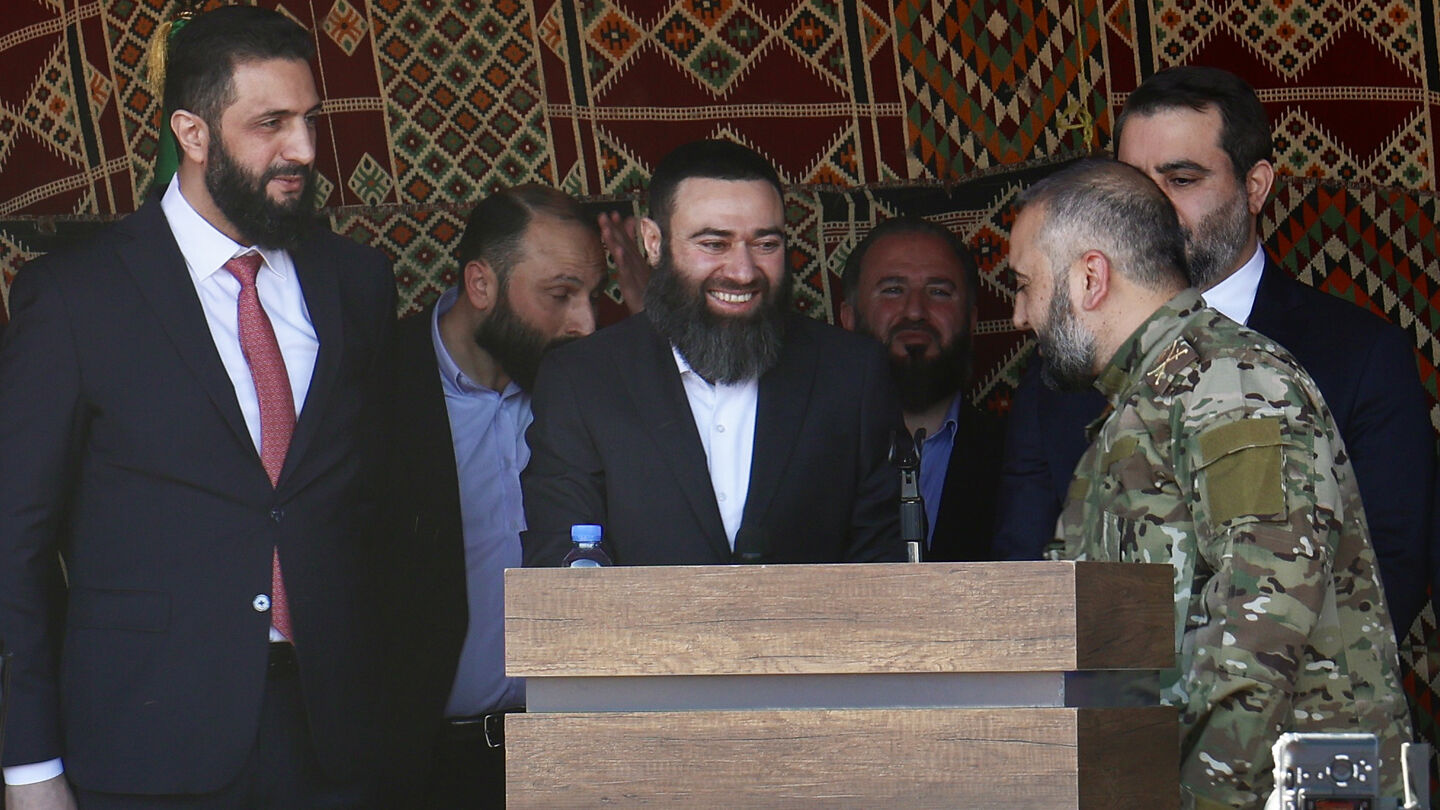
Syrian President Ahmed al-Sharaa (L) stands next to former Syrian rebel leader Issam Buwaydani (C), during a function in Douma on April 23, 2026. — Bakr ALKASEM / AFP via Getty Images

🚨 Why China is worried
From Beijing’s perspective, Syria’s new leadership is deeply intertwined with Hayat Tahrir al-Sham (HTS), an Islamist militant movement that hosted TIP fighters for years.
TIP seeks to establish an Islamic state in Xinjiang and parts of Central Asia. According to Foreign Policy, Uyghur leaders in Syria say their community numbers around 15,000 people, including roughly 5,000 fighters, mostly based in Idlib and Jisr al-Shughur.
Last June, Reuters reported that Syria’s new leadership planned to integrate roughly 3,500 foreign fighters — primarily Uyghurs — into the Syrian army’s 84th Division with US knowledge and oversight as part of broader military restructuring efforts.
The Foundation for Defense of Democracies reported that former TIP commander Abdulaziz Dawud Hudaberdi, also known as “Zahid,” was promoted to brigadier general within Syria’s military structure.
For China, the concern is not only ideological but strategic. Beijing fears Syria could evolve into a permissive environment for anti-China militant activity or become a symbolic victory for transnational jihadist movements involving Uyghur fighters.
💰 Despite the risks, Chinese investment is growing
Despite those security concerns, Chinese companies are steadily positioning themselves inside Syria’s reconstruction economy.
After more than 13 years of war, Syria’s rebuilding needs are enormous. The World Bank estimates reconstruction costs at roughly $216 billion, while Syrian Economy Minister Mohammed Nidal al-Shaar said in May 2025 that rebuilding a “new Syria” could ultimately require more than $1 trillion.
“Companies are coming every day to meet with stakeholders and explore opportunities,” Syrian American businessman Sameer Saboungi told Al-Monitor. “When American companies are not there, you have others filling the void.”
Rather than pursuing massive, high-risk investments, Beijing appears to be taking a cautious, state-backed approach focused on securing long-term strategic footholds while minimizing exposure to Syria’s unstable political and security environment.
📡 Key sectors attracting Chinese investment
Chinese telecom giant Huawei Technologies has emerged as one of the most active foreign players in Syria’s communications sector, reportedly positioning itself for future infrastructure contracts.
China is also expanding into:
- Logistics and free zones
- Warehousing and transportation infrastructure
- Mining and energy development
- Steel manufacturing and industrial projects
Last year, Syria’s General Authority for Land and Sea Ports signed a 20-year memorandum of understanding with Chinese-linked firm Fidi Contracting to develop more than one million square meters across two Syrian free zones.
🔮 What comes next?
China is likely to continue a highly pragmatic relationship with Syria’s new leadership.
The arrangement increasingly appears transactional:
- Beijing offers diplomatic engagement and selective investment.
- Damascus attempts to reassure China that Syria will not become a base for anti-China militancy.
For now, China’s biggest advantage in Syria may be not aggressive spending but the lack of meaningful Western competition. As US and European firms remain cautious, Chinese companies are steadily filling the vacuum despite Beijing’s lingering security fears.

Photo of the week
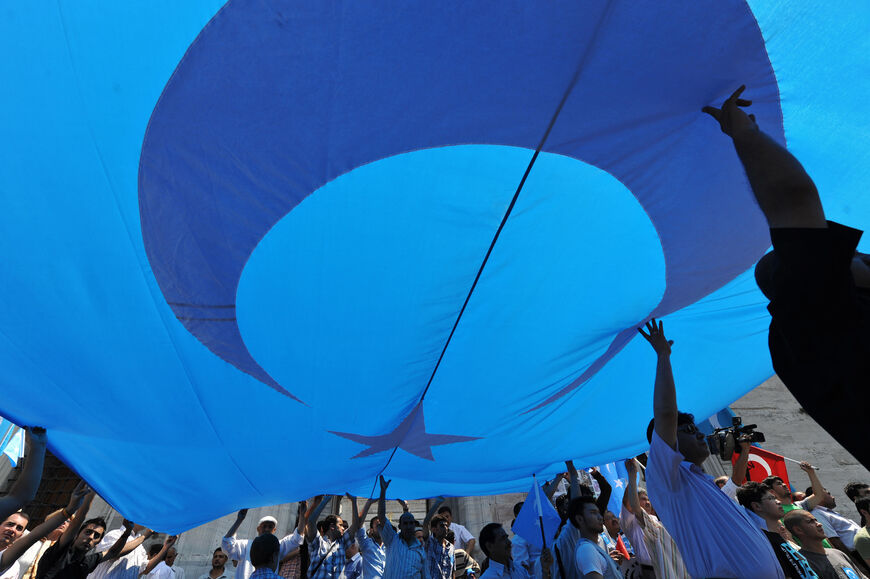
Protesters carry a giant eastern Turkestan flag during a demonstration after a Friday pray at the Beyazit Square in Istanbul, on July 10, 2009. ( MUSTAFA OZER/AFP via Getty Images)

Deals and visits ✈️
- Saudi energy and water firm to speed up $30 billion investment in China
- Saudi Arabia gets first BESS manufacturing facility
- Algeria awards port dredging contract to Chinese company
- Masdar signs supply deal with China's Sungrow for Abu Dhabi RTC renewable energy project
- Chinese special envoy on Afghanistan visits Qatar
- Police in China, UAE and US arrest fraud suspects in joint operation
- China opens second Confucius Institute in Tunisia
- Turkey, China agree to strengthen climate change cooperation
- Chinese foreign ministry voices “deep concern” over targeting of UAE’s Barakah nuclear plant

What we are reading
- China controls a metal that’s key for the Iran war: CNBC
- China’s world-beating solar industry is in turmoil: The Economist
- Taiwan suspects Nvidia chips smuggled to China via Japan: Bloomberg