China plays peacemaker while letting US bleed in Iran
Beijing’s push for a ceasefire in the Iran war highlights its diplomatic ambitions — but entrenched actors and limited leverage leave its plan short on real prospects.


You're reading an excerpt from Al-Monitor China-Middle East, where we analyze China's deepening engagement with the region. To get this newsletter in your inbox weekly, sign up here.
In Beijing this week, China’s top diplomat, Wang Yi, hosted Pakistan’s Ishaq Dar in an effort to end the Iran war, which has dragged into its second month, with the US’s initial goal of a Venezuela-like regime change proving fleeting.
The five-point peace plan, as Beatrice Farhat reported, calls for an immediate ceasefire, the start of peace talks, halting attacks on non-military targets like power plants, ensuring safe ship passage through the Strait of Hormuz and respecting UN resolutions.
In theory, the proposal's aim is to provide an acceptable endgame for the conflict, but its goals are harder to achieve now as the situation has grown messier, the actors are more entrenched and China has limited leverage to end it.
As we pointed out from the beginning of the war, China is in no rush to end it. Why? Beijing is watching the US sink deeper into the Iranian battlefield — pouring in billions, stretching troops thin and chasing a decisive victory that never comes. It’s a geopolitical windfall for China, weakening America’s grip without Beijing firing a shot.
The war is already diverting US military resources, troops and focus from Asia, easing pressure on Taiwan and the South China Sea. With sanctions waivers for Iran and Russia, Beijing is locking in oil imports amid global chaos, boosting its economy while rivals pay premiums. The conflict also fractures Western alliances and tarnishes America’s image as a reliable power.
The cover of The Economist this week illustrates China's edge in the conflict:
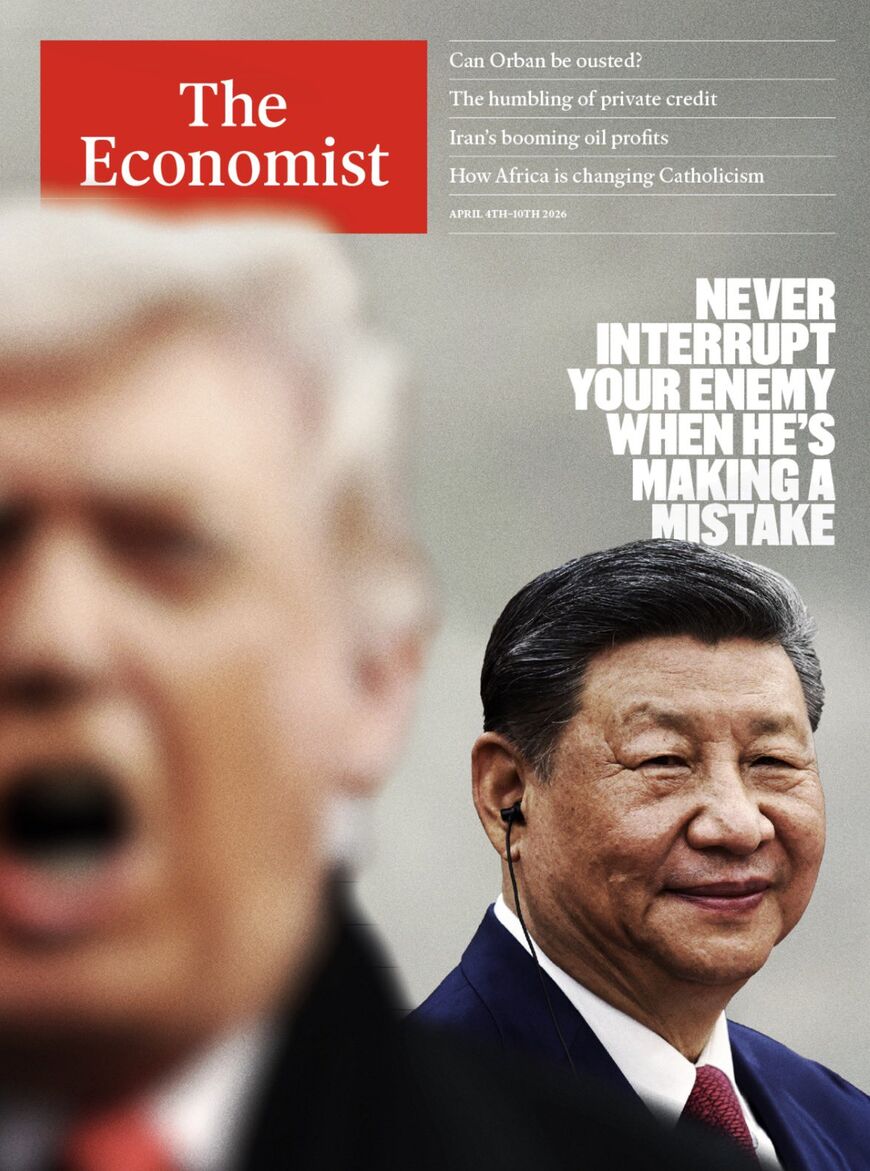
(The cover of The Economist released on April 1, 2026. Source: Idrees Ali, X)
By hosting Pakistan’s foreign minister, China is ensuring it has a diplomatic footprint in any future effort when the parties are ready for a solution. For now, a tangle of defiant actors — including the main ones, the US, Israel and Iran — and a reluctance on the part of major Gulf states to end the war in its current state complicate China’s bid.
Mainly:
Parties dig in: Iran senses opportunity and is digging deeper; Israel is conducting fiercer strikes; and the UAE, Kuwait, Bahrain and Saudi Arabia (per AP reports) insist the military campaign continue until Iran’s leadership radically “reinvents its behavior.”
Tehran is betting that Trump’s resolve will crack under domestic pressure. Israel is also not ready for the war to end and, as Ben Caspit writes, is trying to push Washington into deeper strikes against Iran’s nuclear program or infrastructure.
Gulf powerhouses like the UAE and Saudi Arabia will have to live with a wounded but empowered Iranian regime. Legitimizing Iran’s assertive behavior in the Strait of Hormuz sets a dangerous precedent for these actors.
In his speech on Wednesday night, US President Donald Trump refrained from signaling an end to the war or even hinting at winding it down. Instead, he threatened to “hit them extremely hard over the next two to three weeks," saying, "We are going to bring them back to the Stone Ages, where they belong.”
- China’s limited leverage: China’s pitch lacks enforcement muscle. Unlike the US, with its Gulf bases, carrier strike groups and prepositioned troops, Beijing maintains zero military footprint in the region. It has no airfields, no naval patrols and no rapid-response forces to police a ceasefire or deter violations. That leaves China relying on economic leverage, its strongest suit. As the world’s top importer of Gulf crude, China holds significant sway over oil revenues that Saudi Arabia, the UAE and others depend on.
- Trust deficit: China thrives in backroom brokerage — think the 2023 Saudi-Iran detente, quietly sealed in Beijing — more than in public mediation. In this instance, Israel has no intention of listening to China. Meanwhile, Pakistan, China’s supposed linchpin, is a liability. As analyst Hasan Alhasan noted in our recent Al-Monitor webinar, the Saudis are not pleased with Pakistan’s response to the war. Despite a long-standing joint defense agreement, Pakistan failed to support Riyadh in concrete terms.
Joyce’s take: China’s initiative is a calculated headline grabber, reinforcing Beijing’s image as a responsible power amid US stumbles. Standing in contrast to Washington scores points with Global South audiences and tests the waters for future leverage. But don’t expect a breakthrough soon. The war’s trajectory favors a grinding stalemate over long-term deals.
This one's on us.
The story doesn't end here.
Our correspondents are already on the next chapter. Read everything they file, from $2/week.
See Offers